Noise Emissions from Utility-Scale Battery Storage: What Project Developers Need to Know
Why noise decides BESS permits: the dominant sources, TA Lärm's night-time bottleneck, and five moves to reduce risk before the acoustic report.

Why noise decides BESS permits: the dominant sources, TA Lärm's night-time bottleneck, and five moves to reduce risk before the acoustic report.
Turn Energy is a Swedish IPP building toward 1.5 GW of commissioned solar by 2028. Faced with a fragmented tool stack and late-stage risk discovery at every step of early development, they consolidated onto Glint Solar. The result: a tripled project pipeline, 20% lower development costs, and a 30% lift in project conversion rates.
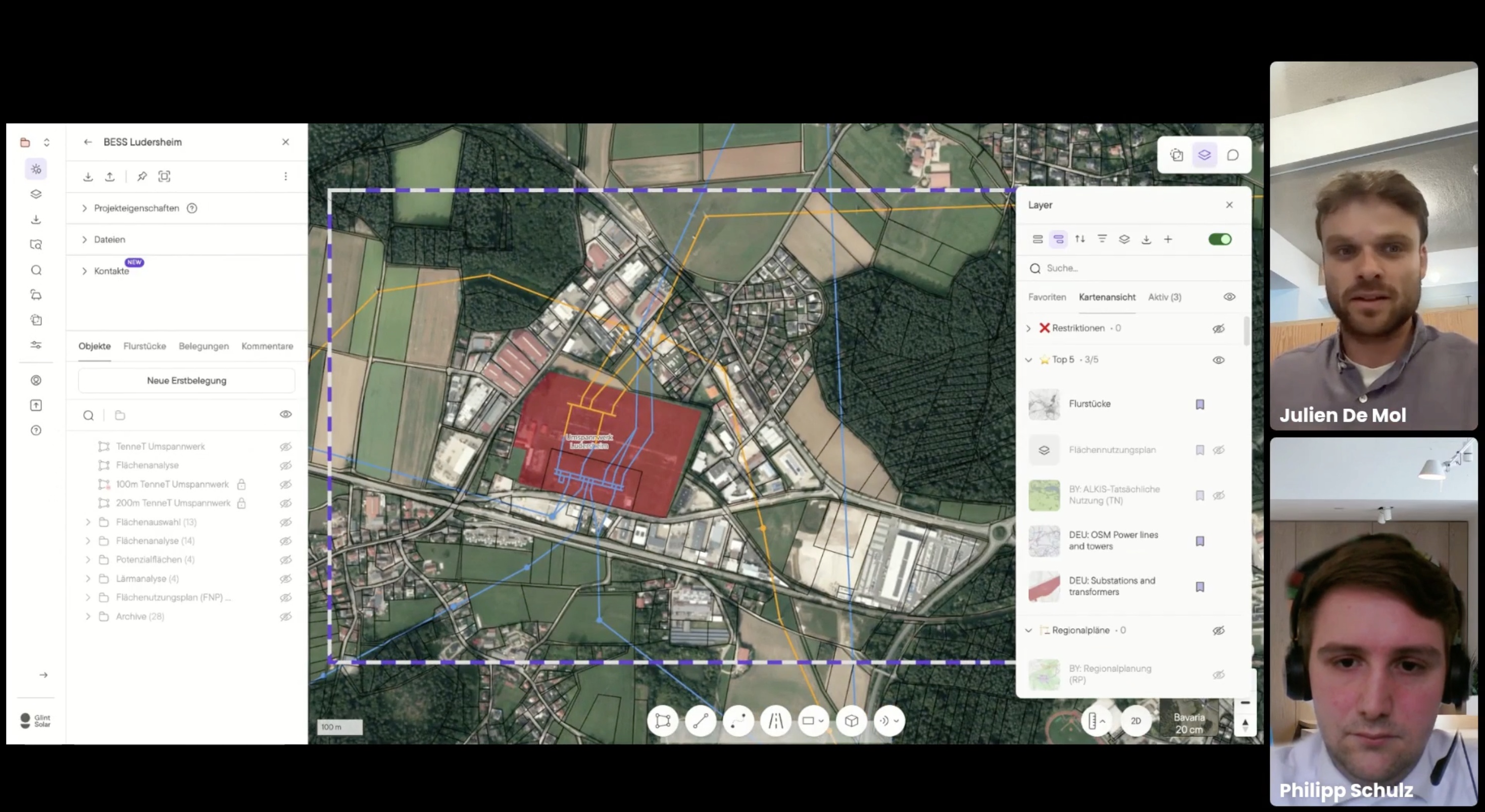
In Germany, the wave of grid connection requests has run ahead of the rules. More than 720 gigawatts of requests have piled up with network operators, the privileging rules under §35 BauGB keep shifting, and noise has become a make-or-break constraint. The result is that time and serious capital can get committed to sites that were never going to qualify, with connection fees paid before anyone checks whether a project is permittable.
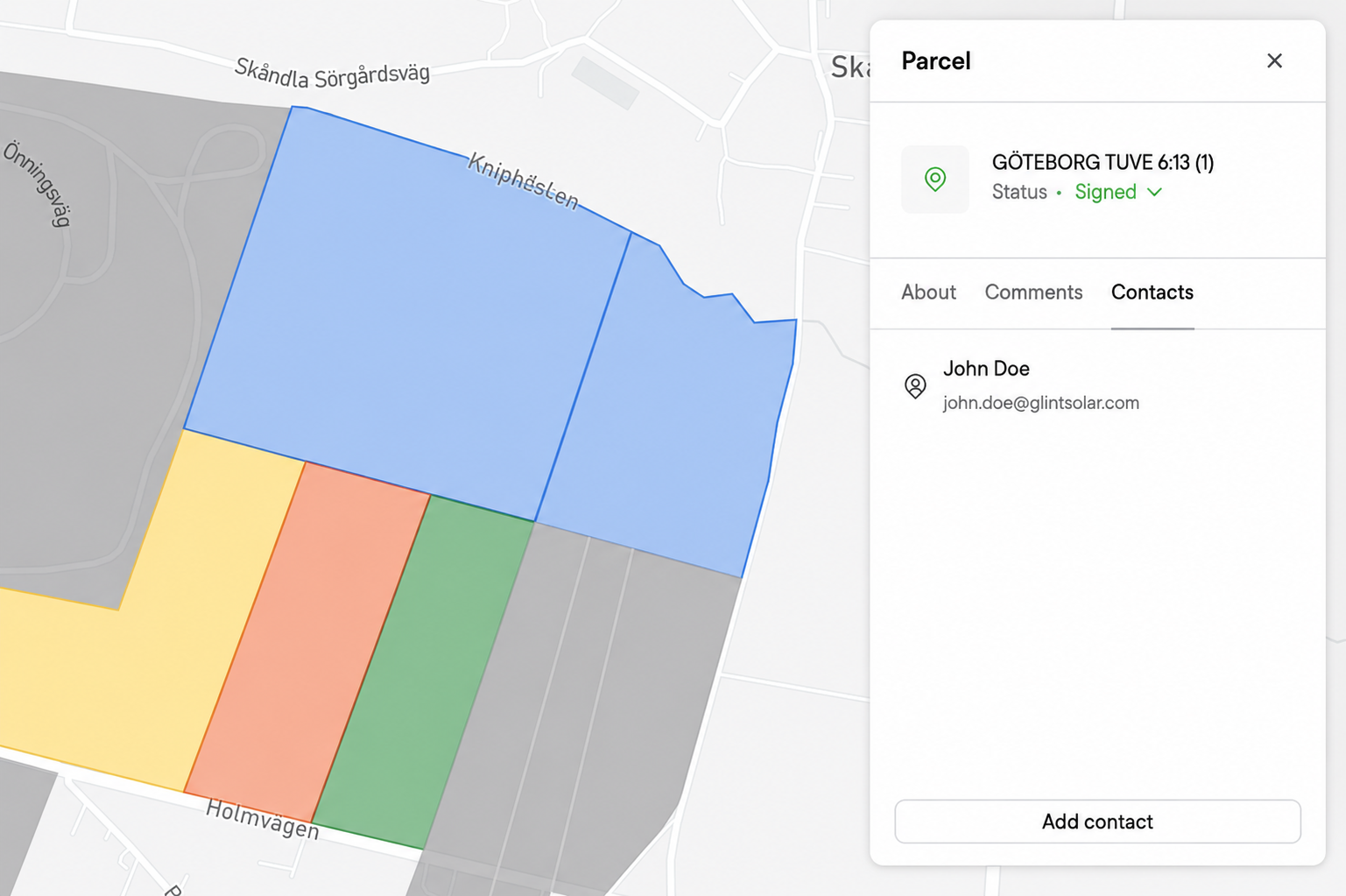
The job of bringing a renewable project to financing has always been bigger than the design. Find the site. Control the land, parcel by parcel. Get the right landowners, grid operators, and municipalities in the conversation. Track every agreement.
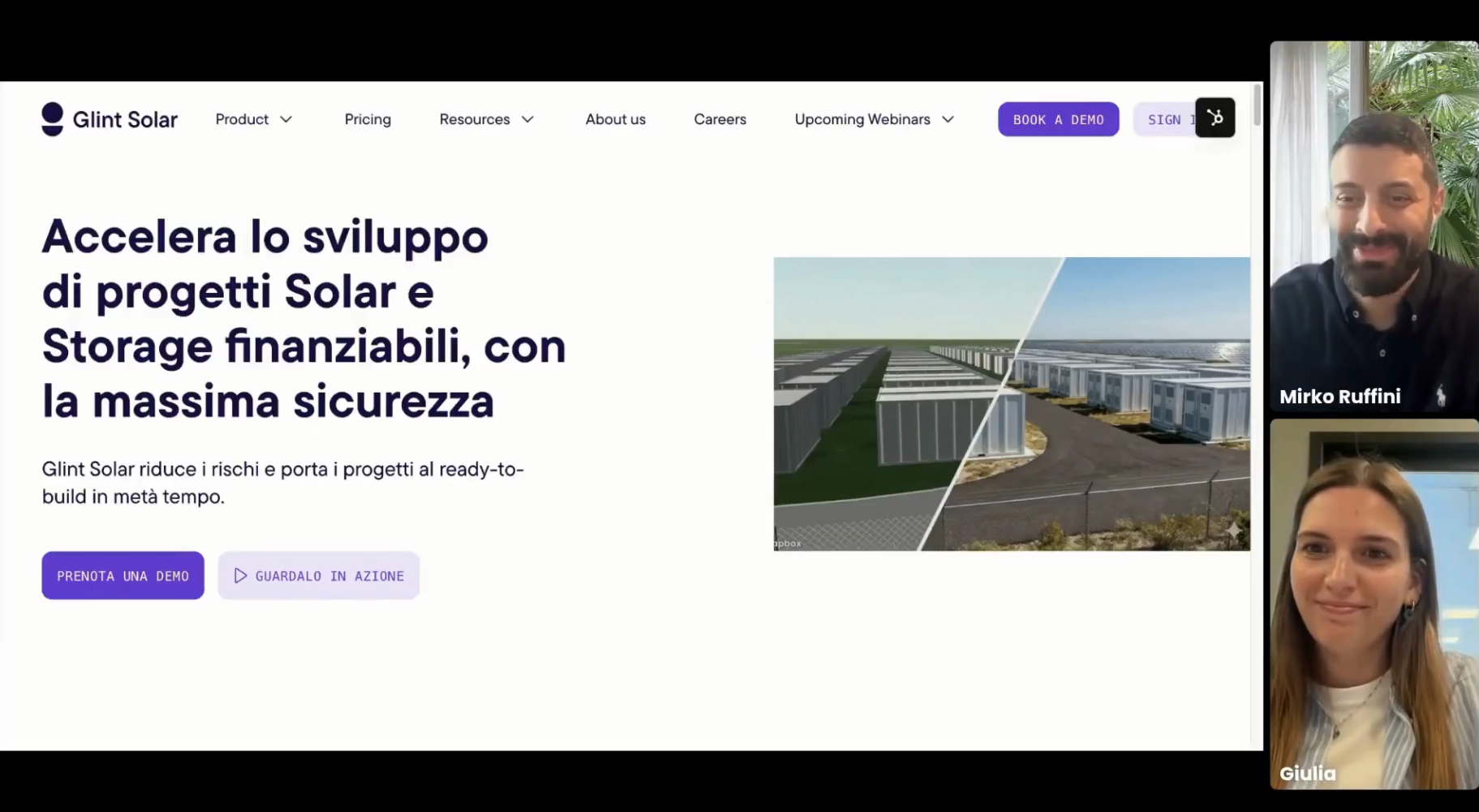
In Italy, preliminary development is where solar projects are won or lost. Landscape constraints, permitting pressure, and data scattered across disconnected tools mean weeks of work and meaningful capital can end up invested in land that was never going to qualify.
Germany's utility-scale battery storage market didn't just grow last year. It surged. Grid connection applications jumped from around 400 GW at the end of 2024 to more than 720 GW by 2025. Only 78 GW have confirmed connection commitments.
Hybrid is already the default for new utility-scale solar. The early question most developers are working on is what the right ratio should be between PV output, BESS power, and BESS capacity. In an era of scarce grid connection capacity, that ratio is the decision that defines a project's future.

In France, moving fast isn't enough if the foundations don't hold up. Between increasingly strict permitting, grid constraints, and technical reviews at every stage, the gaps between development, engineering, and operations are where time and money get lost.
Developing renewable energy projects in Italy is a complex challenge. The sheer volume of variables to consider, from urban planning regulations to regional and local specifications, puts significant pressure on timelines and budgets. In this scenario, access to reliable, updated, and integrated data from the very beginning is the true critical success factor.
Planning renewable energy projects in Germany is complex. A variety of factors come together with significant time and cost pressure. That can include regulatory frameworks, regional specifics, and technical requirements to name a few. Having access to reliable, well-integrated information early in the process is essential.
1x per month. No spam, pure sunshine.