Frequently asked questions
What makes hybrid analysis different from running PV and BESS in separate tools?
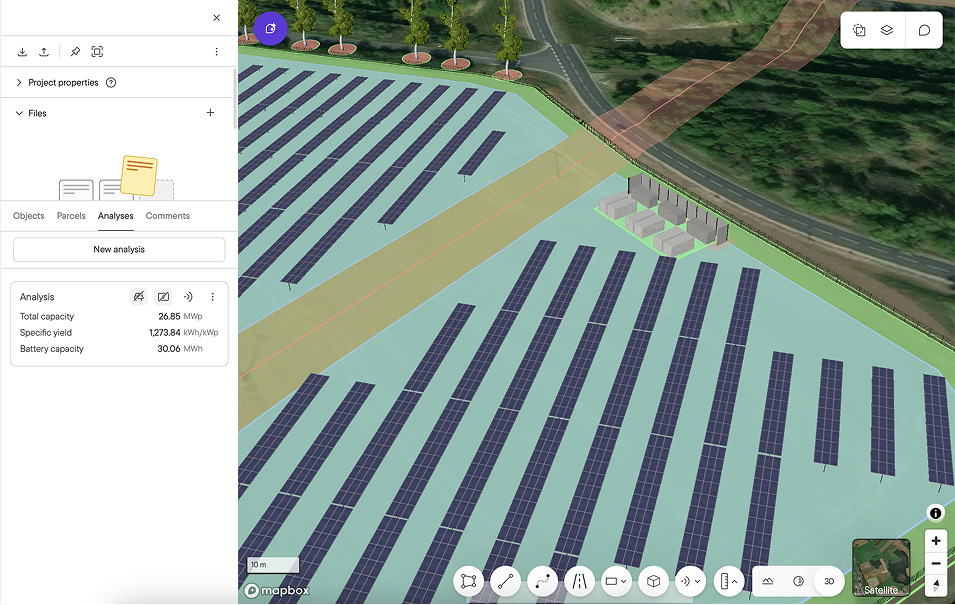
Everything runs on the same site design and grid connection. When you model PV and BESS in separate tools, you're comparing outputs built on different assumptions about the same site. In Glint Solar, the PV layout and BESS configuration share the same data, so the comparison is accurate.
How does the arbitrage pricing work?
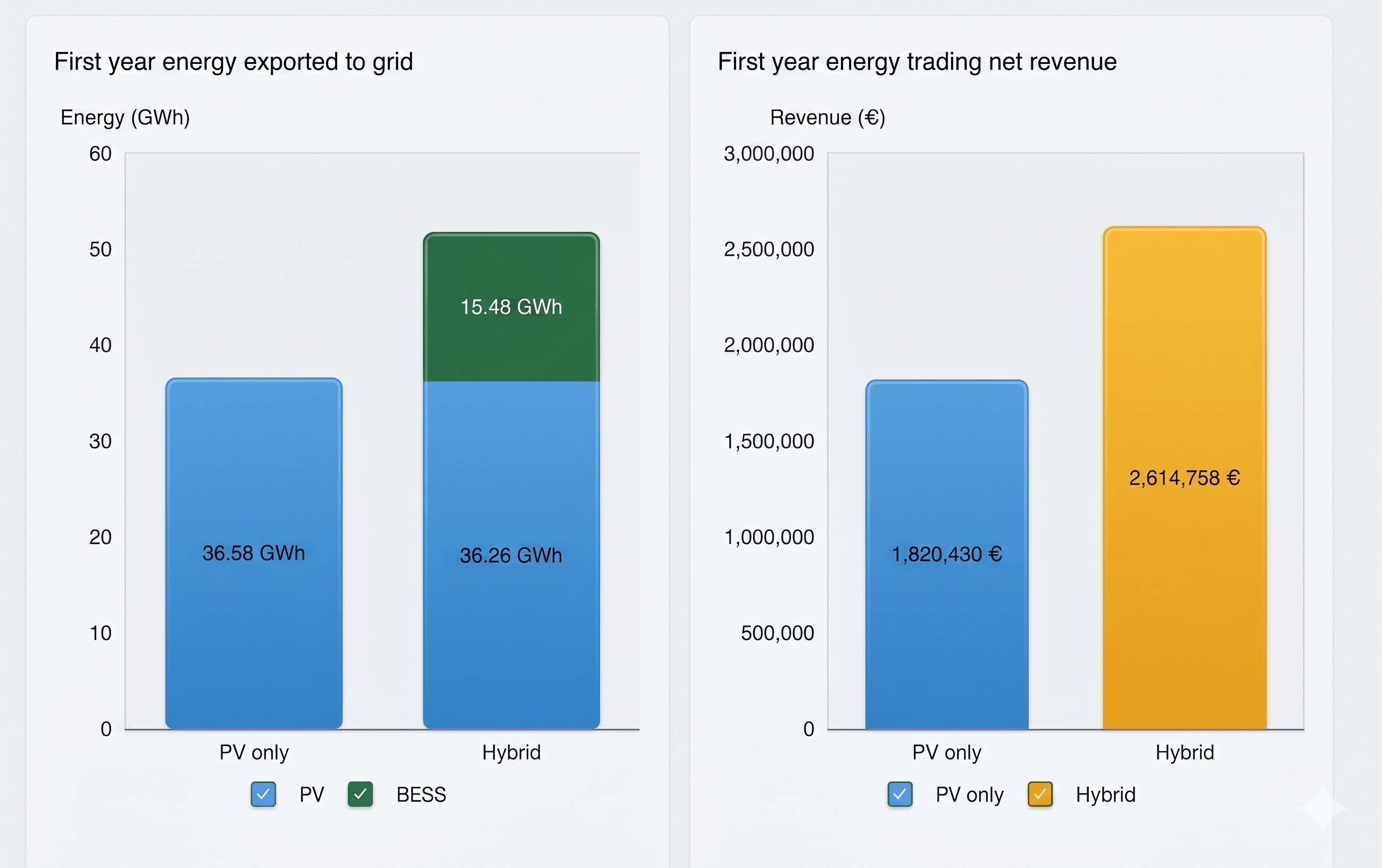
Historical day-ahead spot prices feed into the revenue model across 18 markets. You compare dispatch strategies against the price signal your project will actually see. The hybrid analysis article goes deeper on the methodology.
What configurations can I compare?
PV-only, BESS-only, and PV-BESS hybrid, with variable storage capacities. You adjust BESS capacity and PV layout without rebuilding from scratch, so testing a range of sizing options is quick. The same screen can also run on a hybrid constraint profile, so co-located candidates are screened on the constraints that apply to a hybrid site, not on solar rules alone.
How does the output feed into investor or lender conversations?
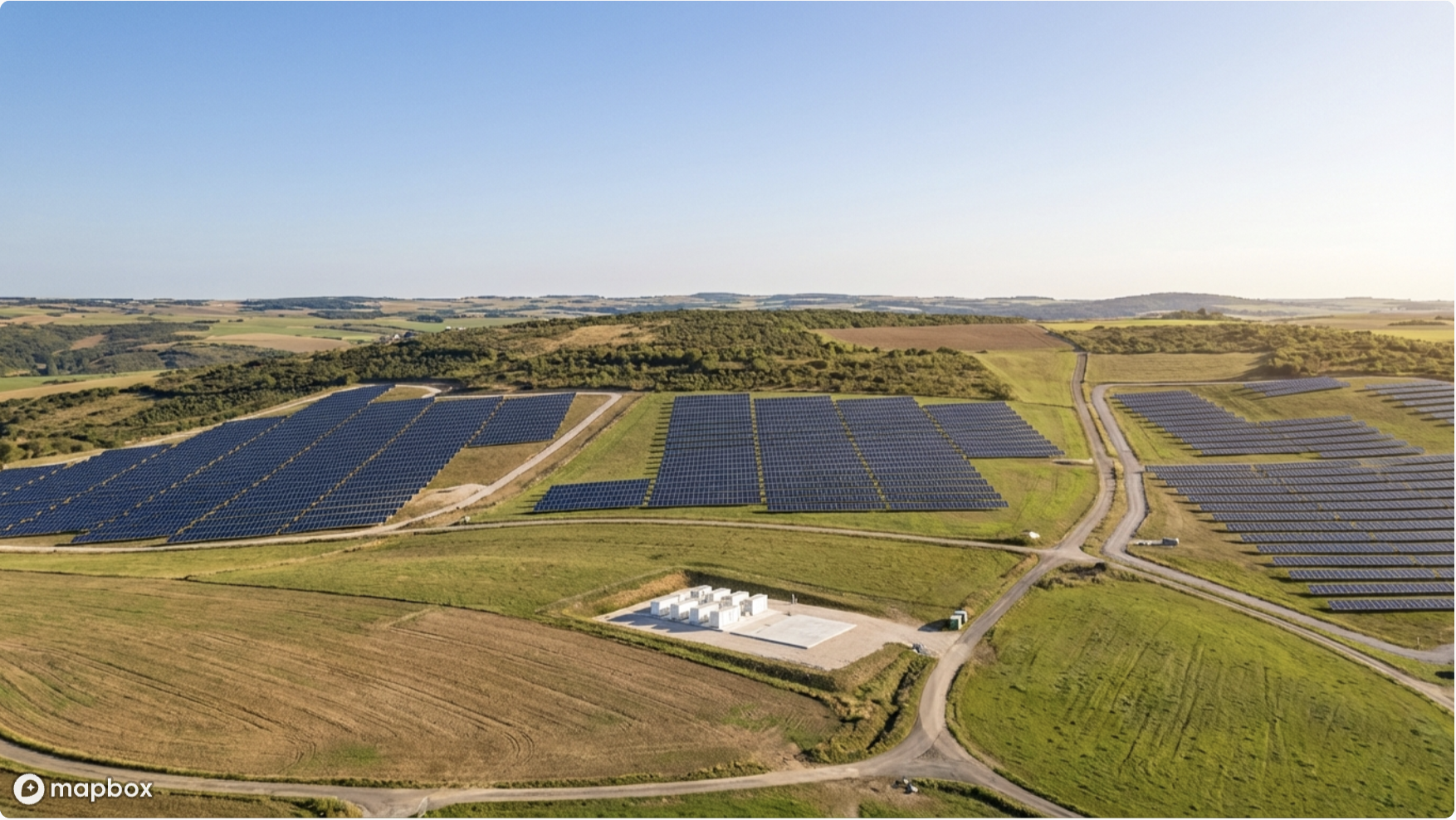
The platform generates reports that package capacity, yield, revenue projections, and AI visualisations from a single dataset. Commercial and technical teams work from the same numbers. No version drift between what the developer presents and what the engineer modelled.
Can I run hybrid analysis on a site I'm already developing as PV-only?
Yes. You can add BESS to an existing PV design and run the hybrid scenario alongside the original. It's useful for sites where you've done preliminary design work and want to test whether storage improves the revenue case. See the BESS platform for how the storage-specific screening works.