
Utilize preliminary noise modeling for BESS projects

Run noise modelling during the design phases and fix layout problems before they become planning problems.

See acoustic risk on a map in minutes.

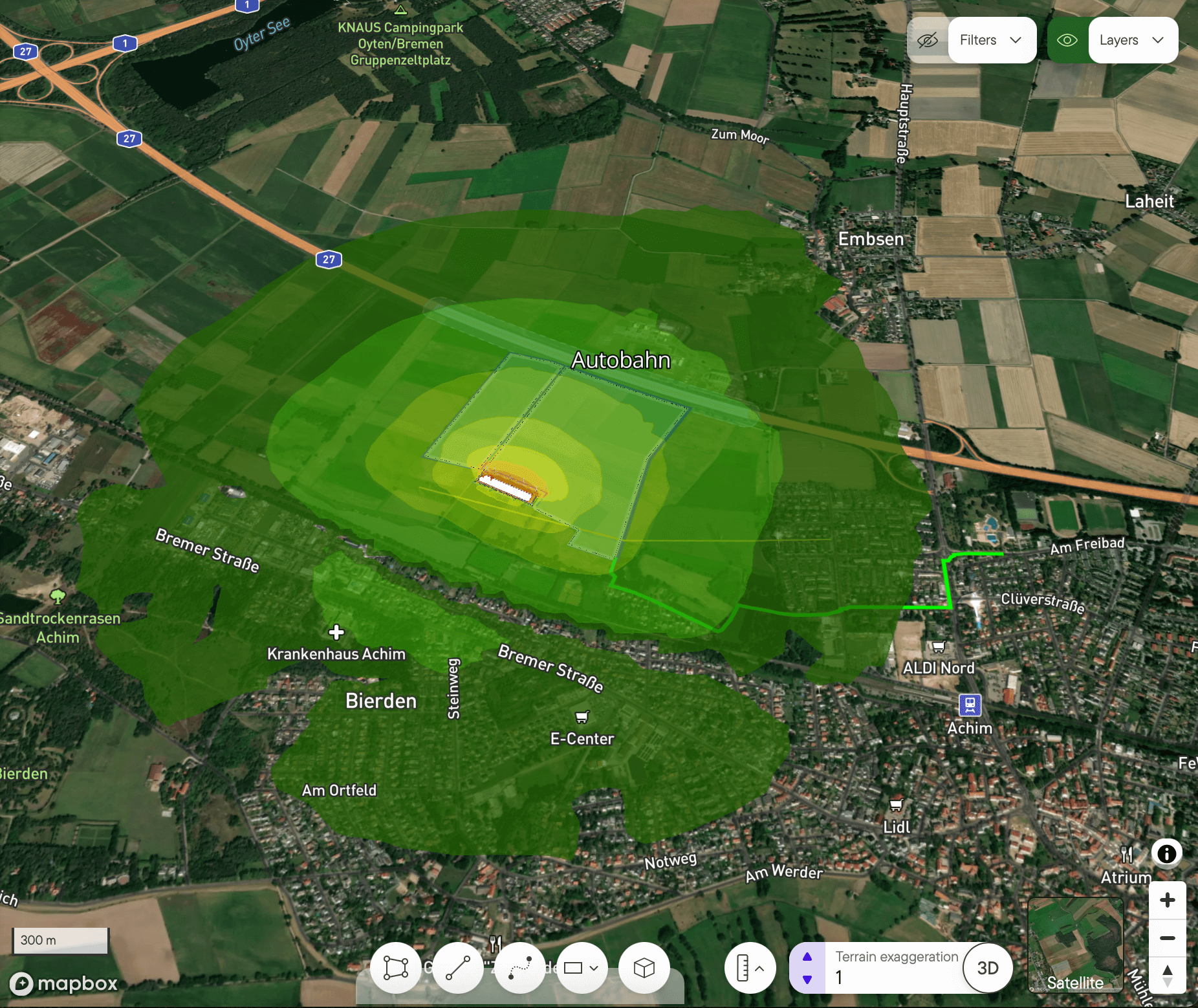
  • Place emitters on your battery containers and MV stations, drop receivers at the points where sound matters, like a resident or a wildlife habitat, and generate a site noise map.

  • Built on the European CNOSSOS method, with deviation from industry reports typically below 3 dBA in rural areas within 1 km.

  • Every receiver gets broadband and frequency-specific values in a report you can share.
Give communities clear answers, early.

  • Show landowners, municipalities, and communities how sound actually travels from your design, before opposition forms around the unknown.

  • Test mitigation in the design itself: add 3 to 5 metre noise walls, move containers, rerun the model, and watch the contours change.

  • Use vendor sound-power data when you have it or conservative defaults when you don't.

BESS noise contours showing how sound reaches a nearby town in Glint Solar

Built for every team that gets asked about noise.

Noise is one of the most common reasons BESS projects stall. Each team gets the answer they need, at the stage they need it.

For design engineers

Test container placement, MV station positions, and noise walls against the receivers that matter, and see the noise map update as the design changes. No waiting on an external study between iterations.

Frequently asked questions

How accurate is the noise model?

It uses the European CNOSSOS method, and within 1 km of the site, deviation from industry noise reports is typically below 3 dBA in rural areas. Results are preliminary estimates, so you'll still need regulatory confirmation before a formal submission. The point is knowing early whether your design holds, not replacing the final study. Read the full article here for more details.

What are emitters and receivers?

An emitter is anything that radiates acoustic energy into the environment. In a BESS that means your battery containers and MV stations, with their electrical equipment and ventilation fans. A receiver is the point where sound is of concern, such as a resident, a workplace, or a wildlife habitat. You add both from the drawing tool, feed emitters broadband or frequency-band sound-power data, and set a global receiver height (2 m minimum recommended).

Can I run it before I've secured the land?

Yes, and that's where it earns its keep. Acoustic feasibility becomes one more check during site screening, alongside everything else you weigh up to understand project viability before money is committed.

Does this replace a consultant's noise study?

No. You'll still need a formal study for regulatory submission. What changes is when you find out about noise problems: during design, when fixing them costs a layout change, rather than after, when it costs a redesign and a re-evaluation.

BOOK A DEMO

See our Noise Modelling in action.

Bring a BESS project you're assessing. We'll place the emitters, set receivers at the nearest points of concern, and show you the noise map in minutes.

mountain_help_illustration_transparent