Developing BESS in the US: What Kills Projects in 2027, and How to Avoid It

A site can clear the tax credit, hold a queue slot and pencil in its market, then stall at a county hearing. Storage developers have always started from the grid, and that still holds. But a good connection no longer decides a project on its own.

This guide covers standalone, utility-scale storage in ERCOT, CAISO, PJM and MISO. It takes the four risks that stop US storage sites one by one, then sets out the order to screen a site in, so the money goes to the sites that survive.

What's inside

  • How the tax credit's sourcing test rises to 60% for storage starting construction in 2027, and why a plan that clears for solar can fail for storage
  • Interconnection waits by market, from 20 months in ERCOT to 40 in PJM, and the faster routes for projects that qualify
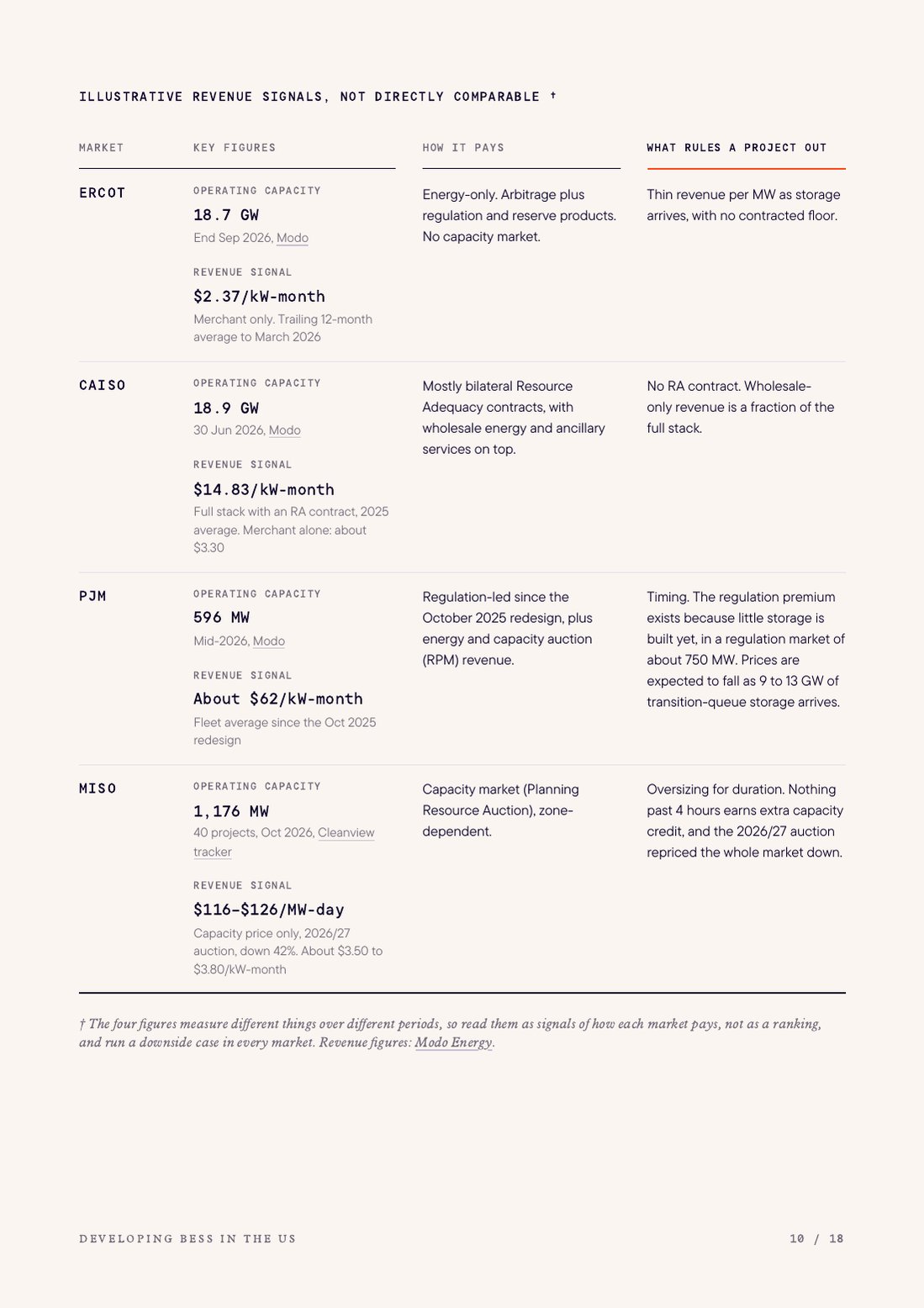
  • How ERCOT, CAISO, PJM and MISO pay a battery, and the downside case to run in each
  • Fire code, setbacks, noise limits and state preemption, with what's changed in California, Texas and Michigan
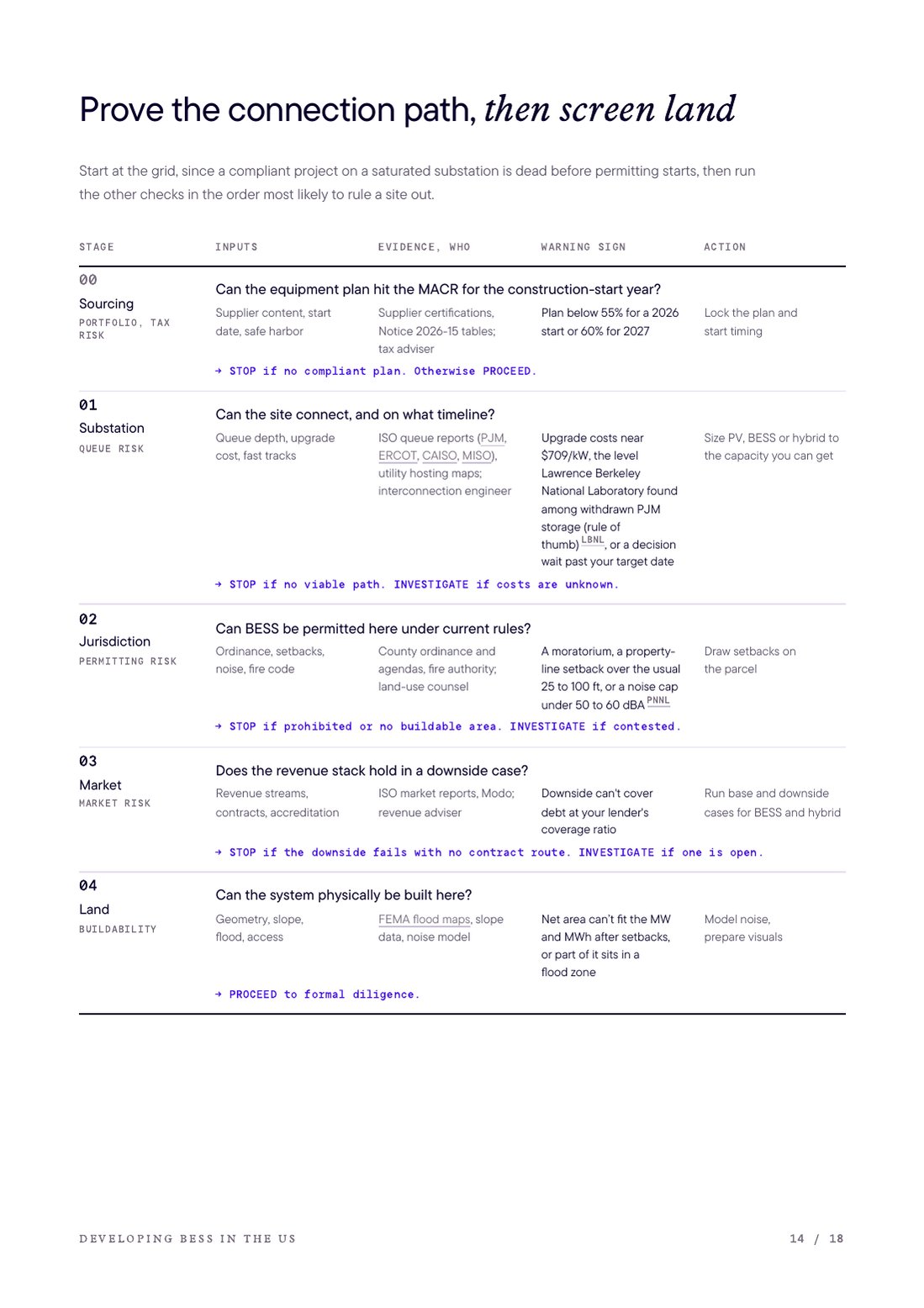
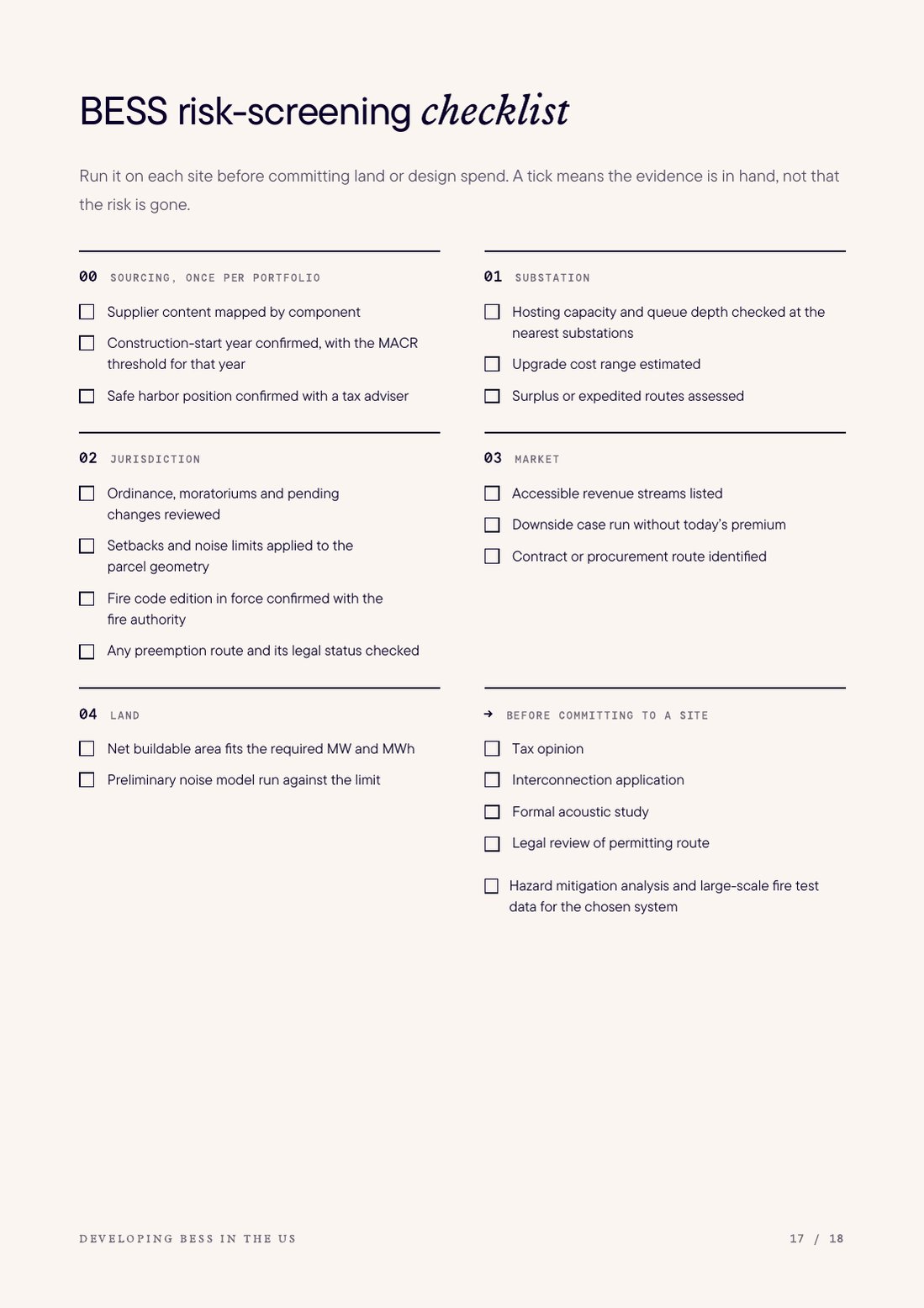
  • A five-stage screening order, one hypothetical site run through it, and a one-page checklist
  • Five dates between December 2026 and the end of 2027 that change how hard each risk is to clear
A look inside

4

Risks, each with early checks and warning signs

4

Markets compared: ERCOT, CAISO, PJM and MISO

5

Dates to watch before the end of 2027

Page 10 of the guide: how ERCOT, CAISO, PJM and MISO pay a battery
How each market paysRevenue signals for ERCOT, CAISO, PJM and MISO, and what rules a project out in each.
Page 14 of the guide: the screening order, from sourcing to land
The order to screen a siteFive stages, starting at the substation, each with the evidence to collect and when to stop.
Page 17 of the guide: the BESS risk-screening checklist
A one-page checklistRun it on each site before you commit land or design spend.

The four risks that stop US storage sites

Tax credit eligibility

Risk 01

The credit has to survive a sourcing test that tightens every year. Miss the ratio and the project gets no credit at all.

The interconnection queue

Risk 02

The queue has to offer a workable route. The national average wait is 25 months, and up to four years near data-center load.

The market you sell into

Risk 03

The market has to pay for the asset being built, once today's premium or price is gone.

Can it be permitted?

Risk 04

The project has to clear fire code, setbacks, noise limits and a local or state permitting route.

Any one of them can kill a project. The guide sets out the order to check them in, and that starts with the substation.

Screen the site before you sign the land

Get the four risks, the order to check them in, and a one-page checklist to run on every site.

Download the guide