Developing BESS in the US: What Kills Projects in 2027, and How to Avoid It
A site can clear the tax credit, hold a queue slot and pencil in its market, then stall at a county hearing. Storage developers have always started from the grid, and that still holds. But a good connection no longer decides a project on its own.
This guide covers standalone, utility-scale storage in ERCOT, CAISO, PJM and MISO. It takes the four risks that stop US storage sites one by one, then sets out the order to screen a site in, so the money goes to the sites that survive.
What's inside
- How the tax credit's sourcing test rises to 60% for storage starting construction in 2027, and why a plan that clears for solar can fail for storage
- Interconnection waits by market, from 20 months in ERCOT to 40 in PJM, and the faster routes for projects that qualify
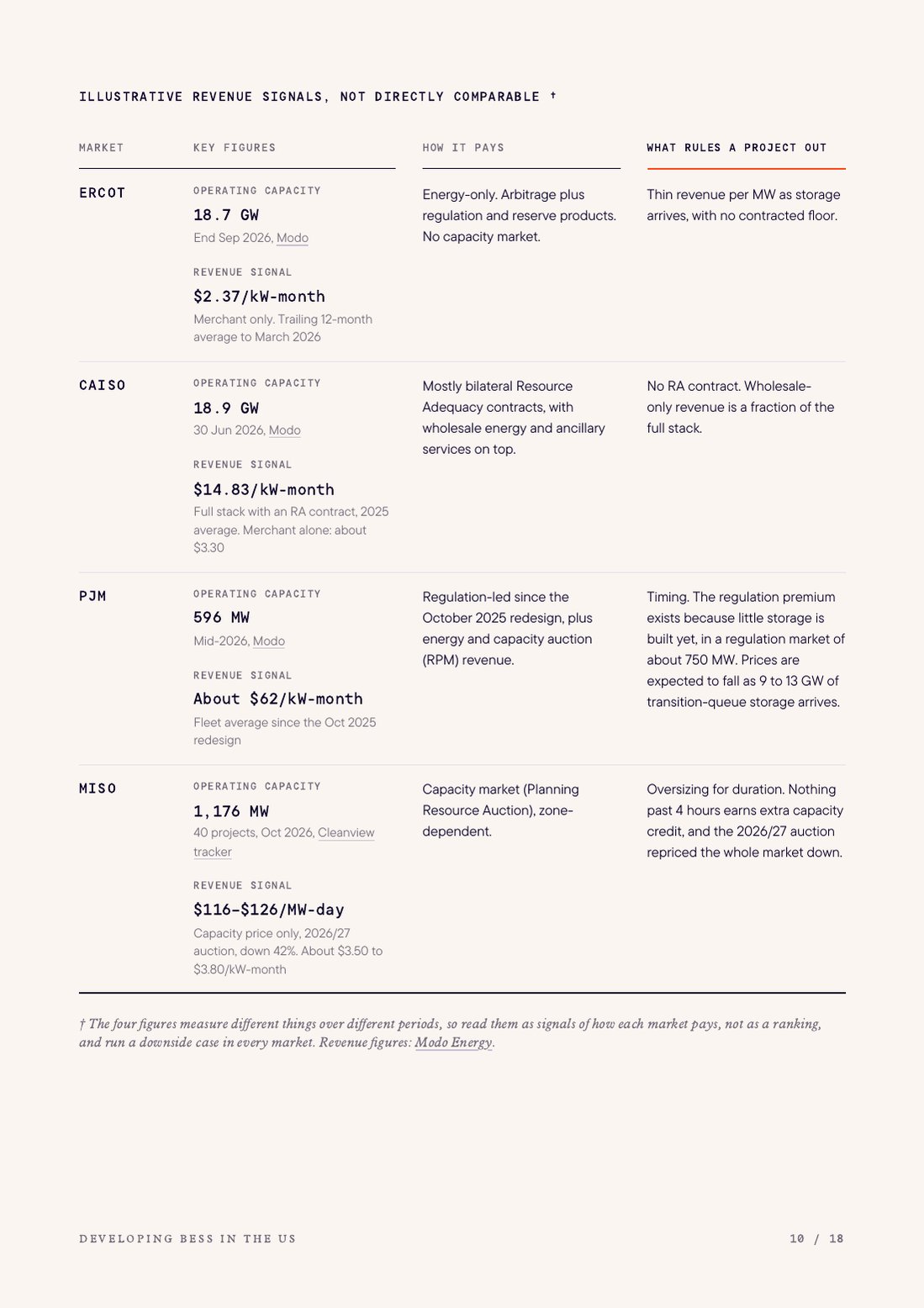
- How ERCOT, CAISO, PJM and MISO pay a battery, and the downside case to run in each
- Fire code, setbacks, noise limits and state preemption, with what's changed in California, Texas and Michigan
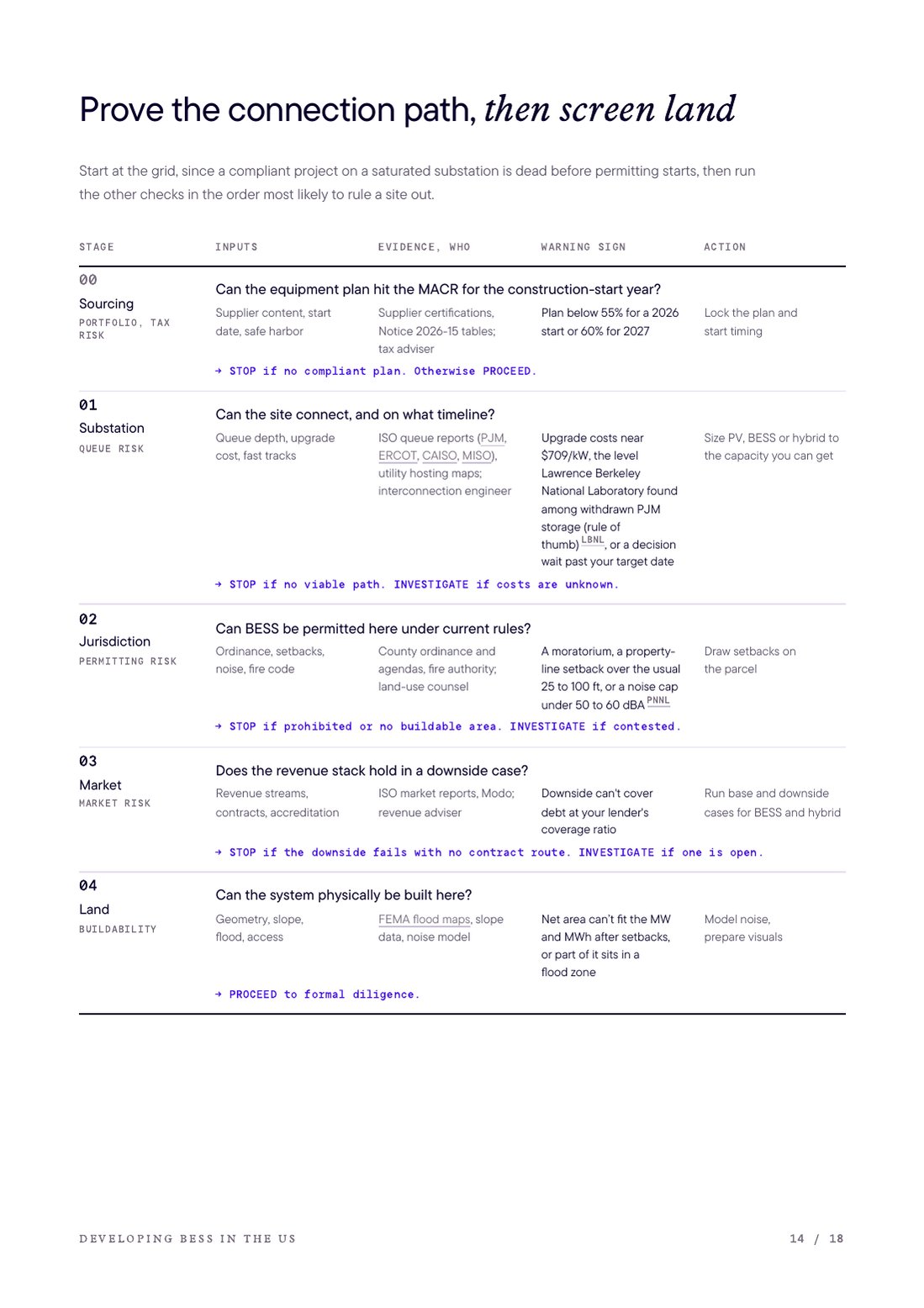
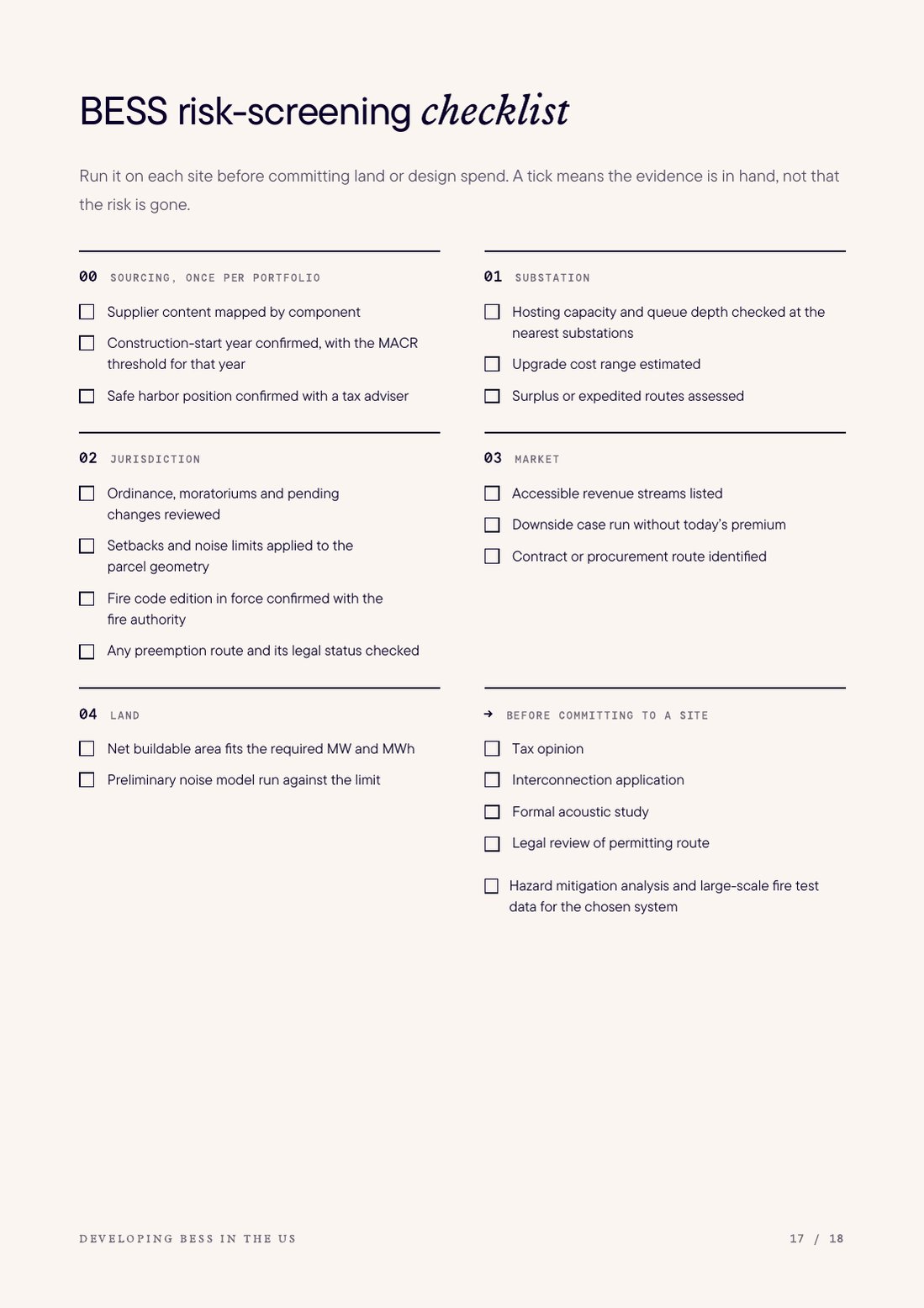
- A five-stage screening order, one hypothetical site run through it, and a one-page checklist
- Five dates between December 2026 and the end of 2027 that change how hard each risk is to clear