Know what the grid will look like when you're ready to connect.

Glint Grid shows where the French grid is heading, substation by substation. It spots competing projects early, and it simulates whether your own project is likely to connect and roughly what it will cost.

Our first cohort of developers has been using it since October, and their feedback is shaping what we build. Since they started, we've added the transmission network. Cohort two is open now.

Tell us a little about your projects and we'll be in touch about next steps.
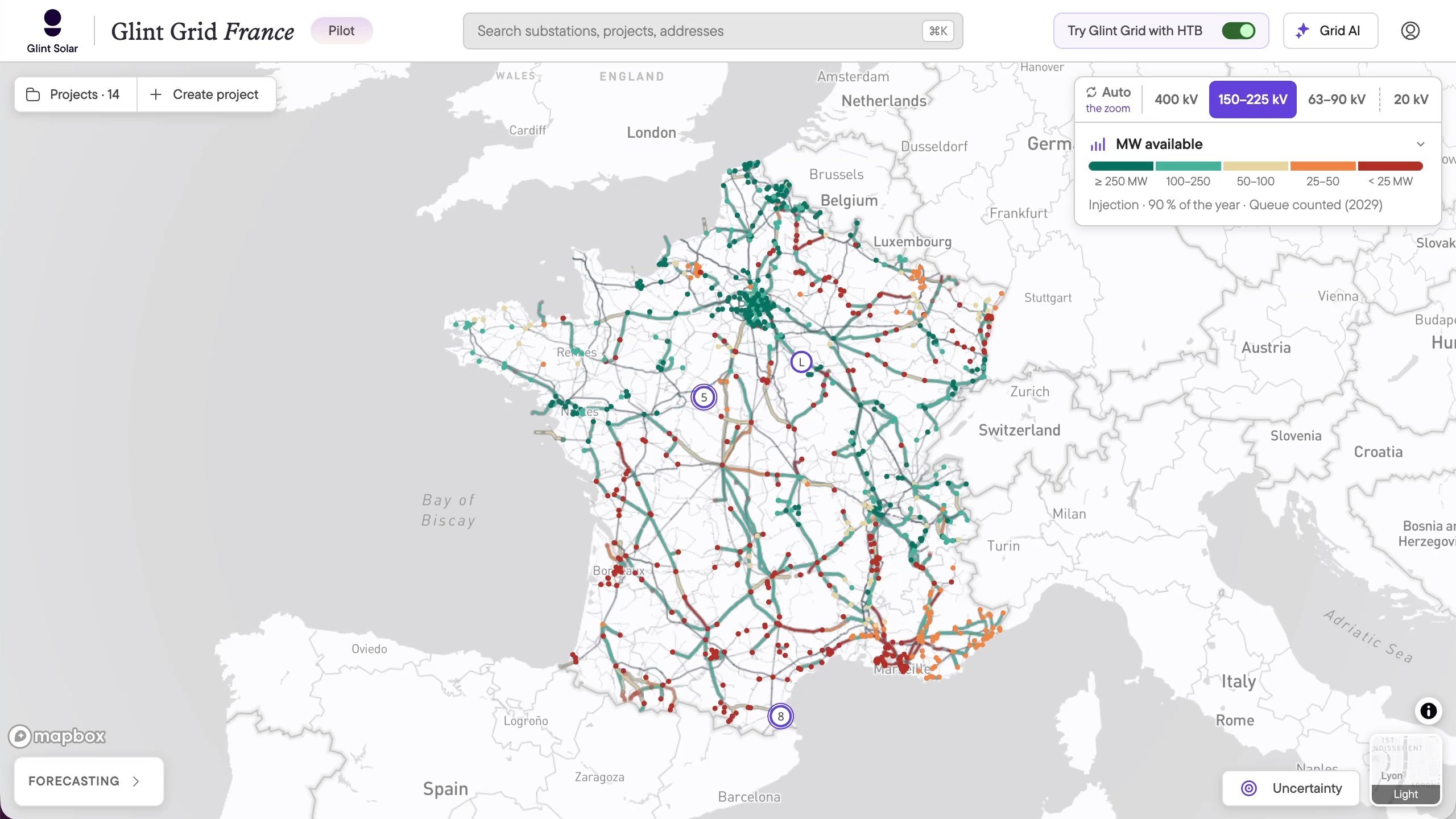
Glint Grid map of France showing MW available on RTE's transmission network, from 63 to 400 kV

Where the pilot stands

October 2026

Cohort one

Our first developers started using Glint Grid on their own projects across France. They've told us what works, what doesn't and what they need next.

Now

Cohort two

Open to new developers. You join a more complete product, with transmission added, and still have a say in what we build next.

Early 2027

Full launch

Glint Grid launches commercially, shaped by what pilots asked for along the way.

The feedback from cohort one has been positive. Several developers told us they value seeing exactly where each number comes from. The request we heard most often, from pilots and from the developers we spoke to around the pilot, was the transmission network. It's in the product now as an early version.

See where the grid is heading.

  • What's left at each substation as Enedis and RTE publish it, next to what Glint's own power flow model calculates.

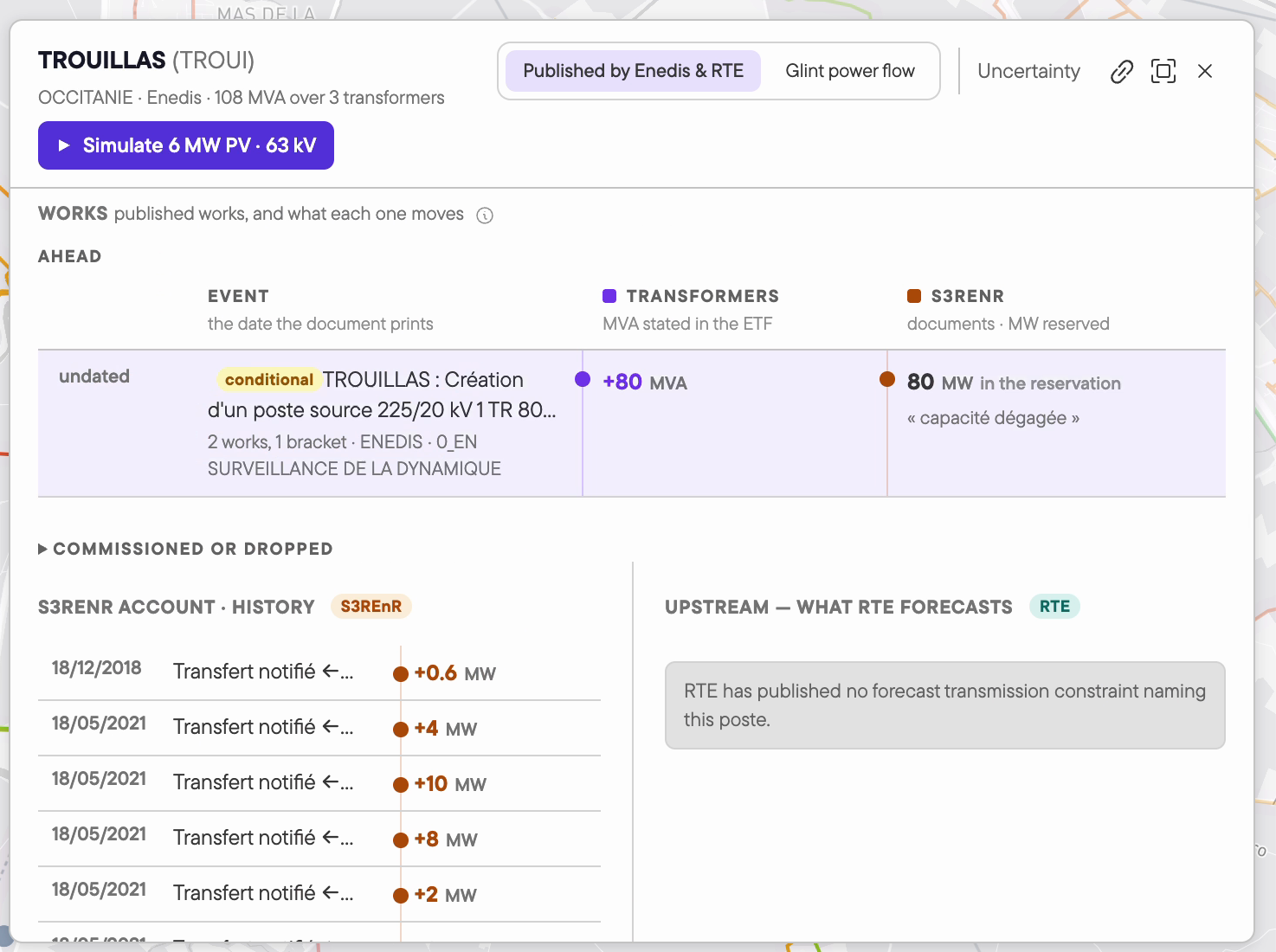
  • Published works, the capacity each one would free and how far along it is.

  • The history of each substation's S3REnR reservation, including capacity transferred elsewhere.

A substation card in Glint Grid with the published works ahead and the S3REnR reservation history

Know which projects will connect before yours.

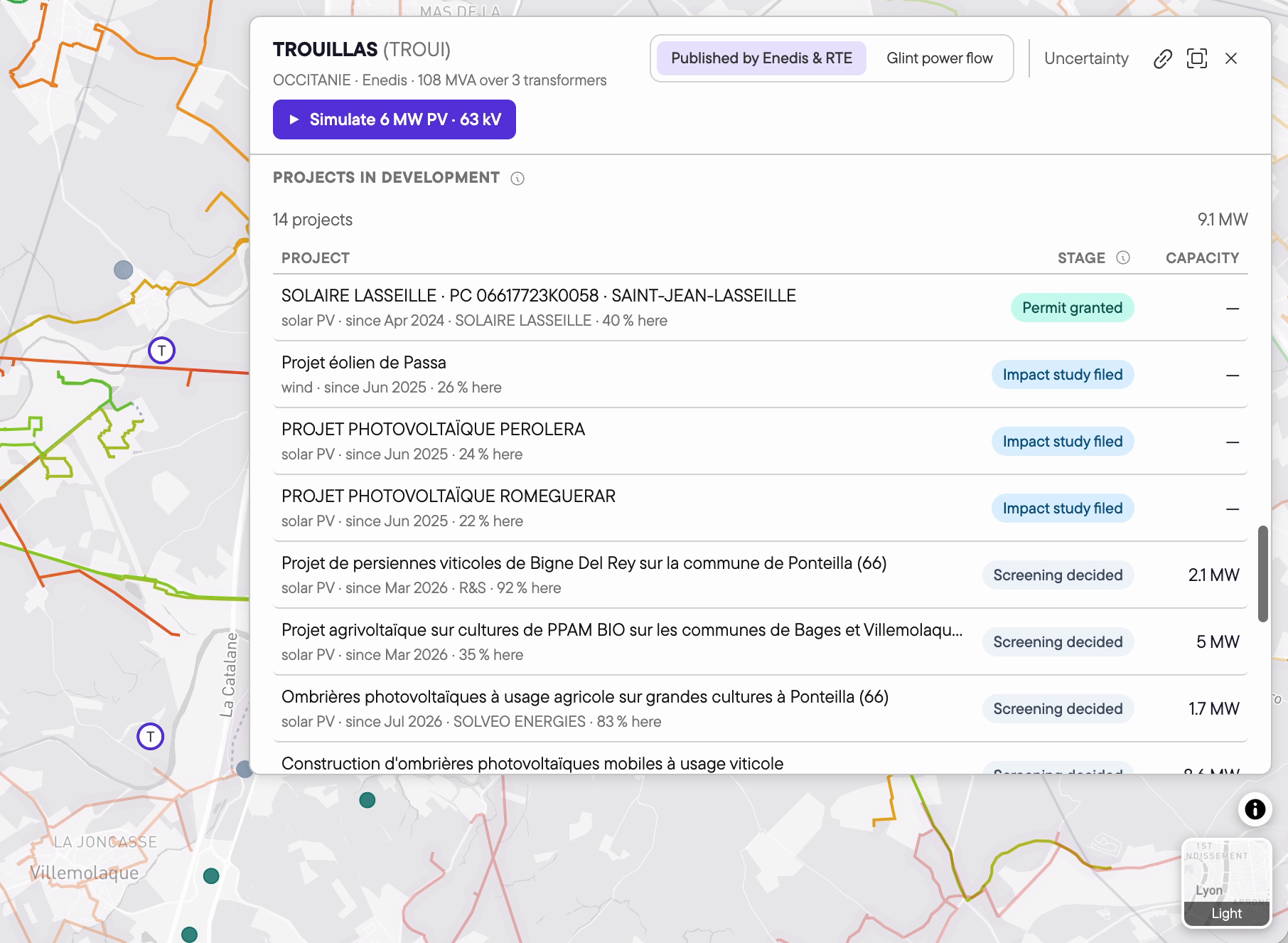
  • Competing projects picked up from public permit and environmental filings, before they reach the queue.

  • How far along each one is, from screening to the final decision, with a link to the filing.

  • The substation each project is likely to connect to, matched by our grid model.

Projects in development around a substation in Glint Grid, with their permitting stage and capacity

See if your project connects, 2 to 5 years ahead.

  • Compare connection options by length, capacity and estimated cost, or draw the route yourself. Each segment is priced by the ground it crosses.

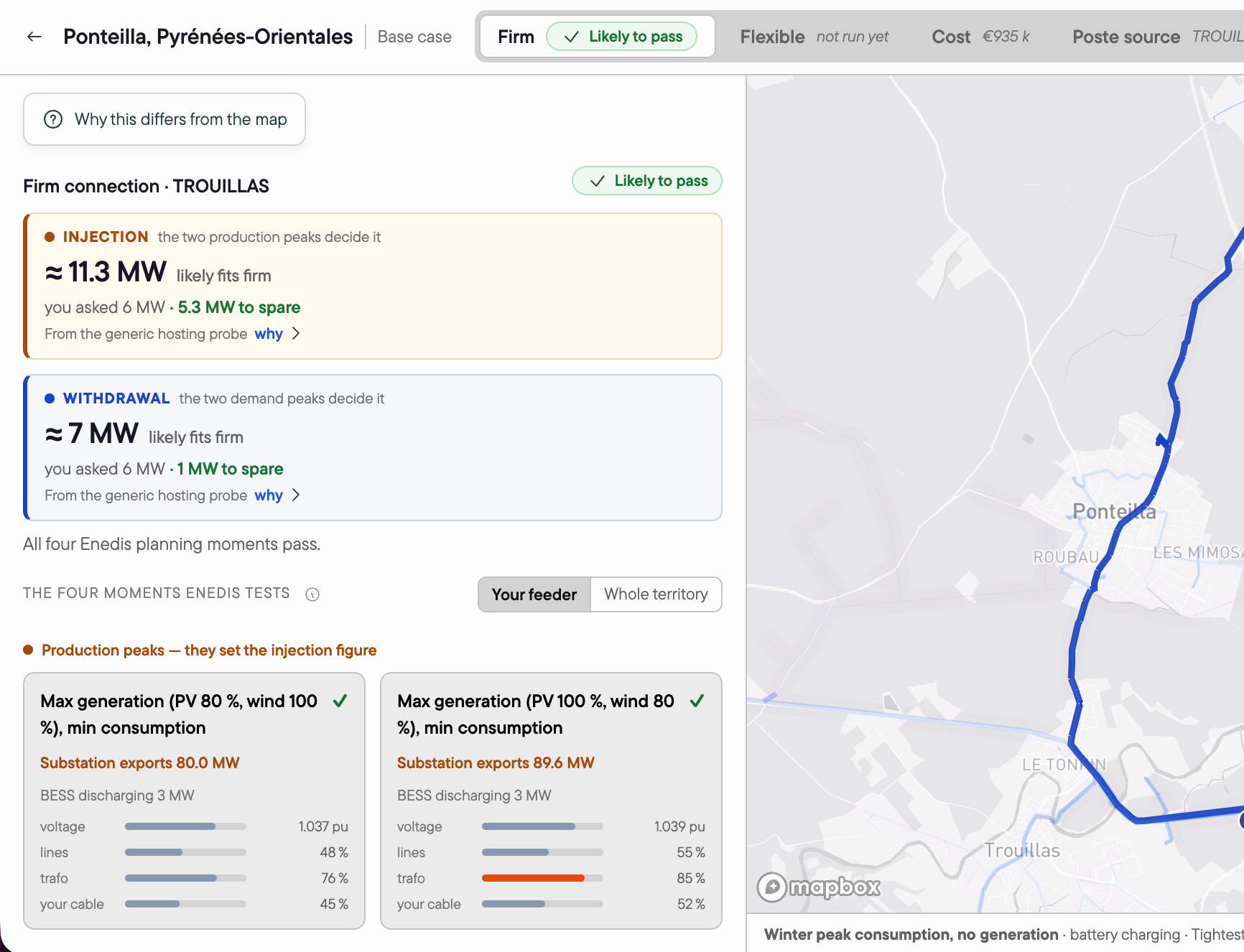
  • The simulation checks your project at the four moments Enedis tests and shows which pass, which fail and why.

  • A "likely to fail" is a useful answer too. You find out a site won't connect before you spend years on its permit.

A firm connection result in Glint Grid, checked at the four planning moments Enedis tests

What's new since cohort one started.

Cohort two starts with a bigger product than cohort one did. These are the main additions so far.

The transmission network

See MW available on RTE's network from 63 to 400 kV, the hours a year a project like yours would be limited, and the lines behind it. It's an early version, and pilots help decide where it goes next.

Batteries, with withdrawal checked

Model a battery on its own or with solar or wind. The simulation checks withdrawal as well as injection, and the report warns you if your battery could break Enedis's swing-rate limit.

Capacity maps and a forecast to 2035

Color the network by hosting capacity, loading, power flow or what limits each line. Then follow published works, permitting projects and planned substations year by year.

Every figure, traced to its source.

  • Each number links to the public document it came from, opened at the right page.

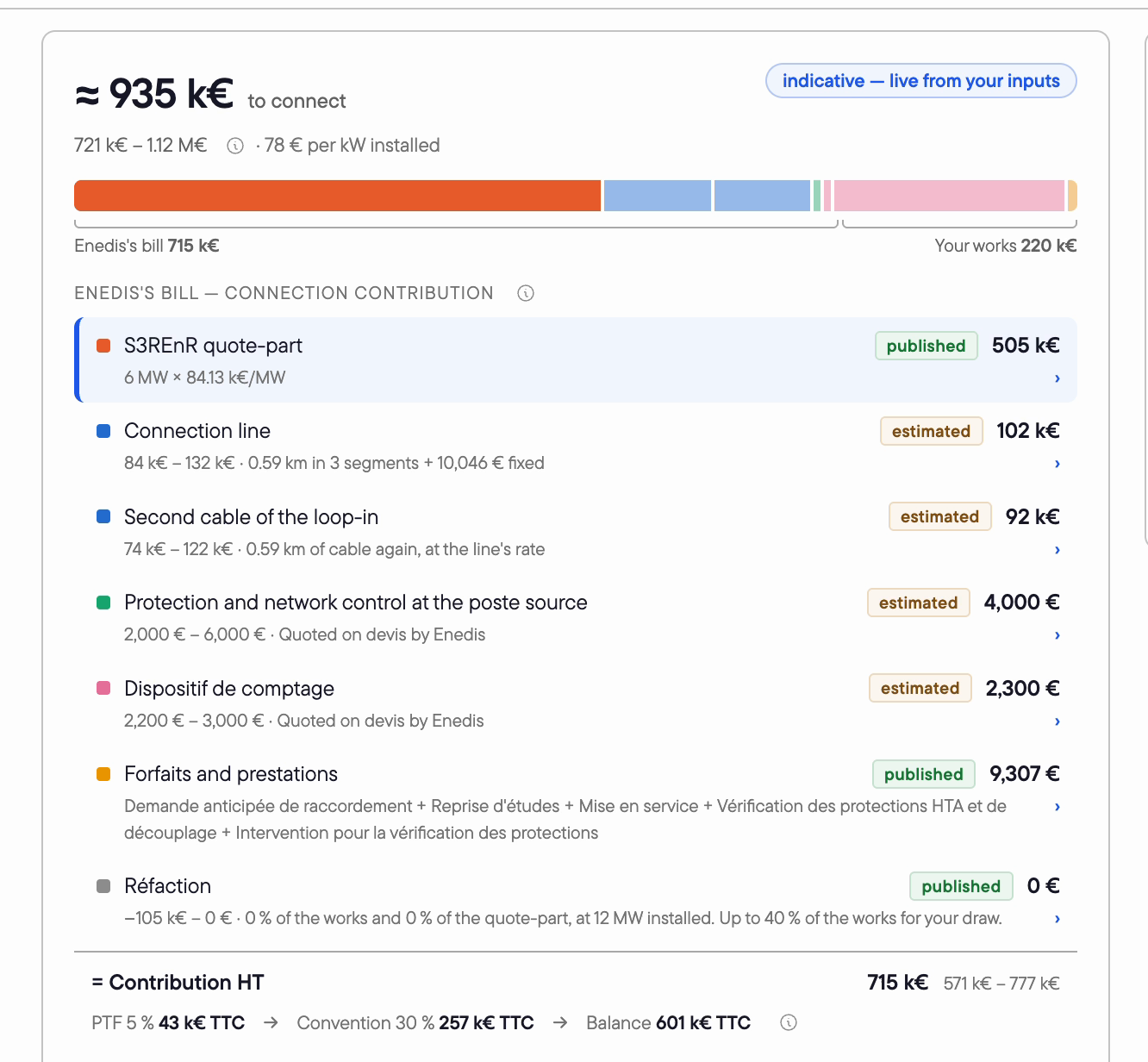
  • Every cost line is marked published or estimated, so you know which ones to check.

  • An uncertainty view shows how far to trust the model at each substation.

Connection cost breakdown in Glint Grid, with each line marked published or estimated

What joining cohort two looks like

What you get

Access to Glint Grid across mainland France, at HTA and HTB, from the day you join. And a direct line to the product team, who'll work through your questions with you.

What we ask

Use it on real projects and tell us what works and what doesn't. Where you can, share some of your PTFs, the connection offers you've had from Enedis or RTE, so we can check the model against real answers.

What you shape

What we build before launch. The list right now includes scenarios where you choose which competing projects to include, sharper cost and capacity estimates, and a confidence range on each result.

Places are limited. We'll take you through terms and timing on a short call.

Read more about the latest updates to Glint Grid.

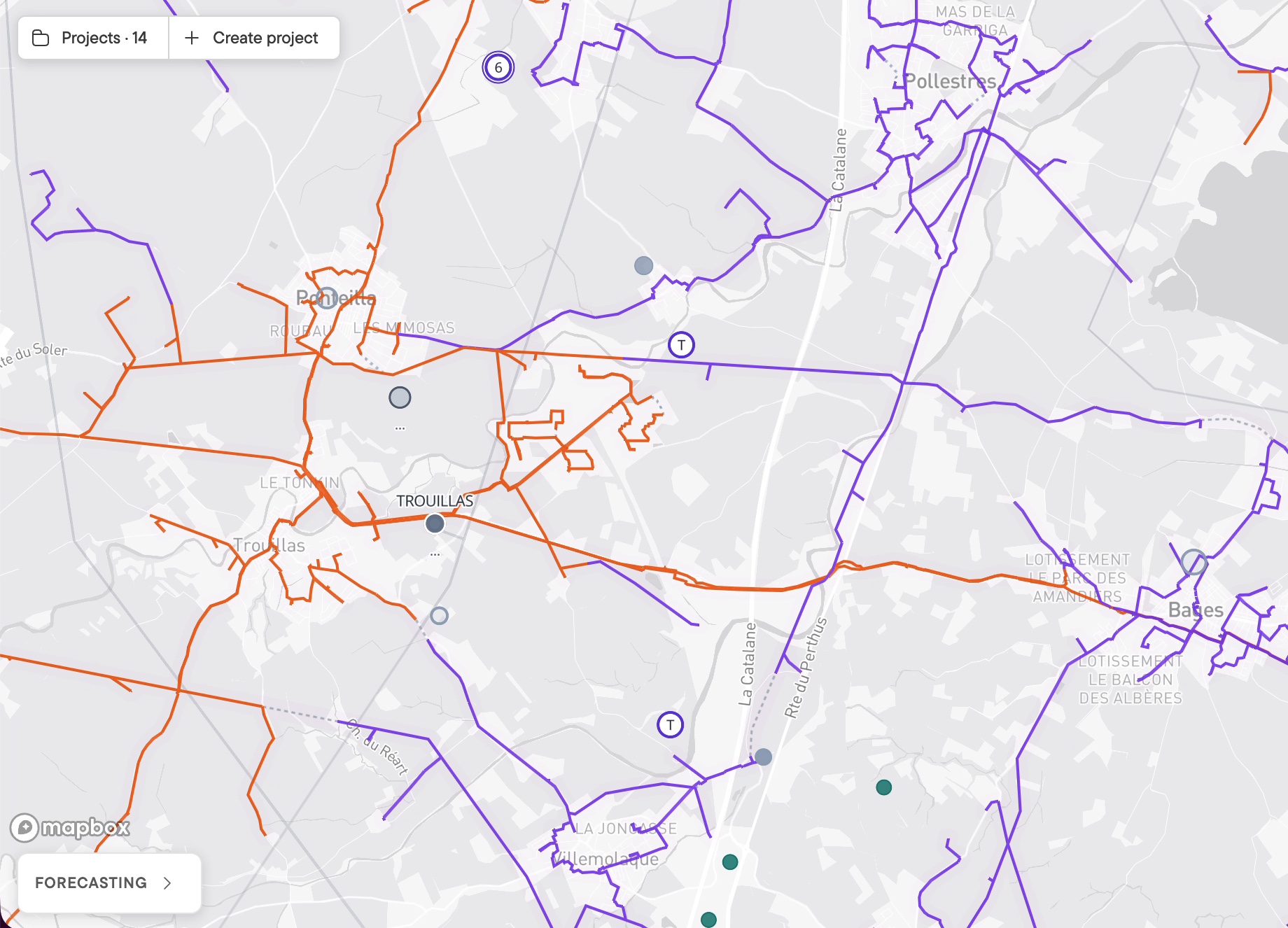
Enedis lines around a substation in Glint Grid, colored by what limits each one

Frequently asked questions

Which grid does it cover?

Mainland France. That's Enedis's distribution network at HTA, plus RTE's transmission network from 63 to 400 kV as an early version. Areas served by local distribution companies other than Enedis aren't covered yet.

How accurate is it?

It's a model built from public data, so it gives you a likely answer, never a certain one. That's why every figure shows its source. The PTFs pilots share are how we measure how close the model gets. Use it to rank sites and rule some out early, then rely on the formal connection study for the final answer.

Does it work for batteries?

Yes. You can study a battery on its own or alongside solar or wind, at HTA or HTB.

What happens to the PTFs I share?

They're used only to validate and improve the model, and they're never shared with third parties.

What happens after the pilot?

Glint Grid launches commercially in early 2027. Before then, we'll agree with you how you carry on.